实验定位 混合偏正 / 校准有效但仍保守
A24 不是重新生成 mesh,而是在 A23 已得到的 VGGT depth/normal 指标上做 retrospective router calibration:选择阶段只使用 VGGT 和 A20 visible-safe 信号,GT Chamfer/F-score 只在最后用来判断路由有没有误拒或误接收。
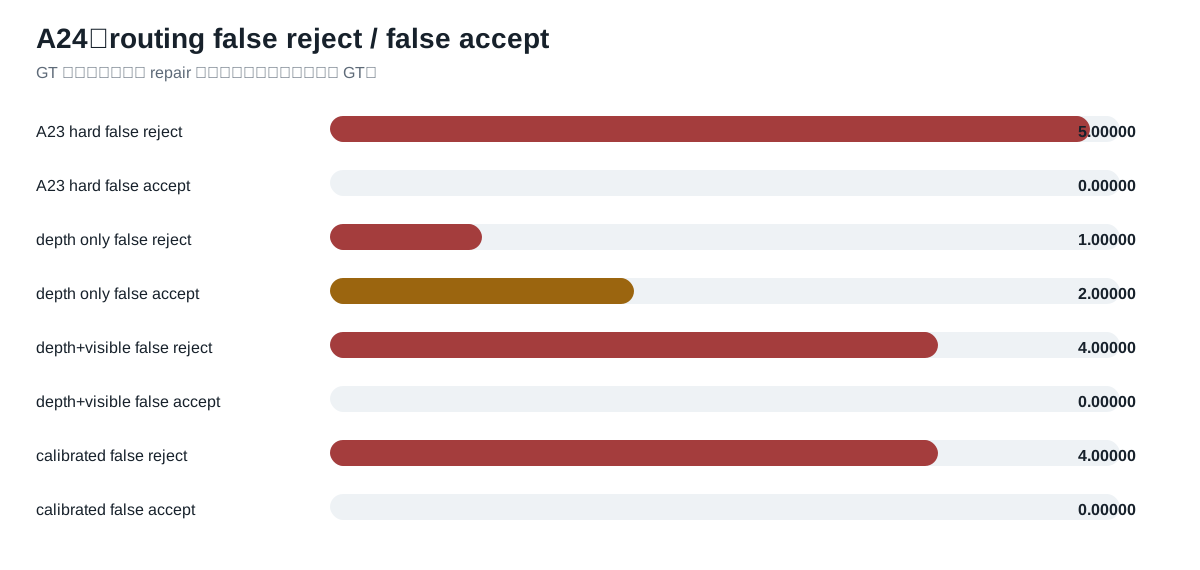
关键变化是把 A23 的 normal hard reject 降级为 soft evidence。结果:A23 hard gate 只选择 2 个 repair,false reject=5;calibrated gate 选择 3 个 repair,false reject 降到 4,并救回了 gso_002,同时仍拒绝 gso_008 这类明显坏 repair。
实验设计(Image-2 风格)
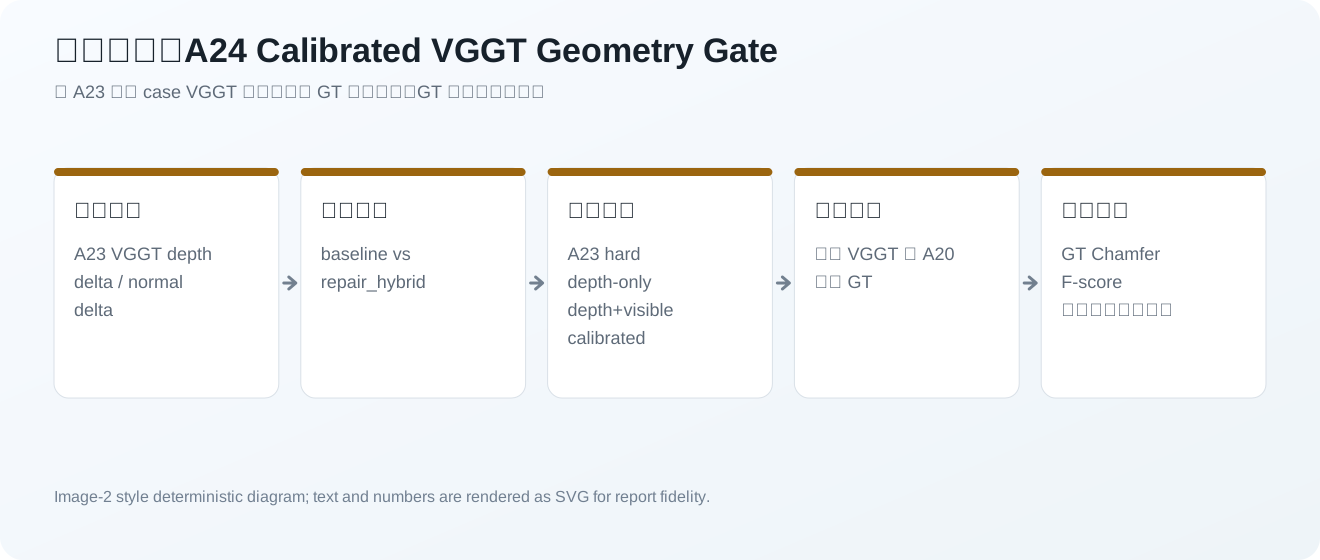
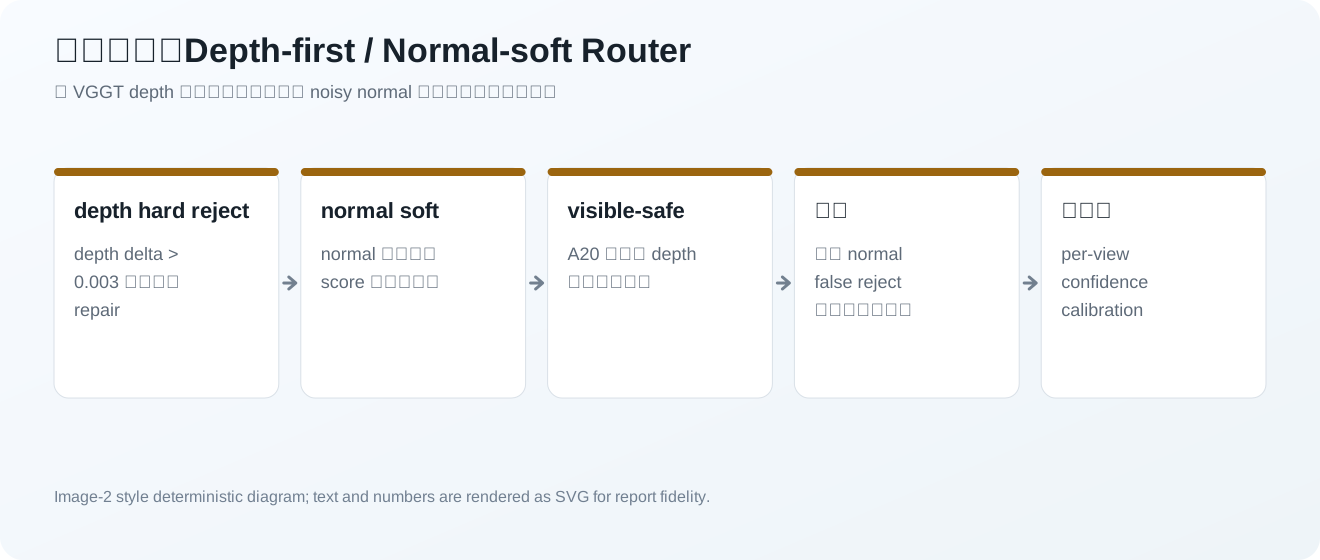
模块设计(Image-2 风格)
Hypothesis
Depth:VGGT depth is treated as the hard visible geometry anchor after A23 showed it catches gso_006/gso_008.
Normal:VGGT normals from finite-difference world points are noisy; they should be soft evidence and only reject when the normal drop is very large without depth support.
Visible-safe:A20 visible-safe remains useful, but it should not veto a repair when depth strongly supports the repair.
Compared Routers
- a23_hard_gate:A23 hard: depth/normal/A20 任一拒绝即回退
- depth_only:只用 VGGT depth hard reject,normal 不否决
- depth_visible_safe:VGGT depth + A20 visible-safe 补充约束
- calibrated_depth_normal:depth-first + normal-soft calibrated gate
实验结果(表格)
| 策略 | 选择 repair 数 | false reject | false accept | selected Chamfer Δ | selected F@5 Δ | 选择的 repair case |
|---|---|---|---|---|---|---|
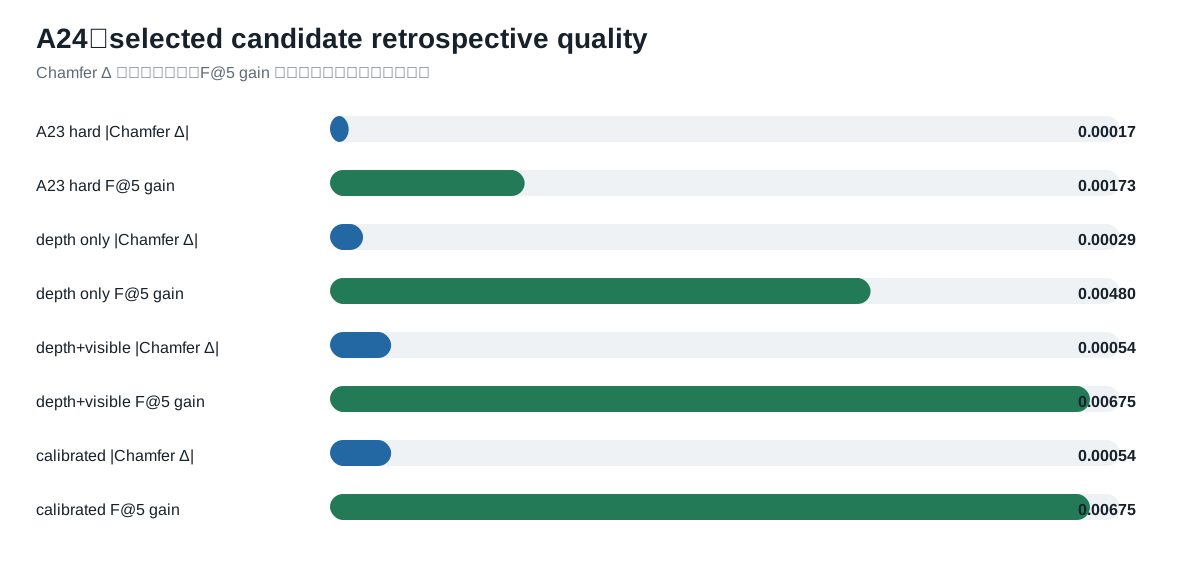
| A23 hard gate | 2 | 5 | 0 | -0.00017 | 0.0017 | gso_000_input4, gso_009_input4 |
| Depth only | 8 | 1 | 2 | -0.00029 | 0.0048 | gso_000_input4, gso_001_input4, gso_002_input4, gso_003_input4, gso_004_input4, gso_005_input4, gso_007_input4, gso_009_input4 |
| Depth + visible-safe | 3 | 4 | 0 | -0.00054 | 0.0067 | gso_000_input4, gso_002_input4, gso_009_input4 |
| Calibrated depth-normal | 3 | 4 | 0 | -0.00054 | 0.0067 | gso_000_input4, gso_002_input4, gso_009_input4 |
Calibrated gate 逐 case 决策
| case | selected | score | VGGT depth Δ | VGGT normal Δ | GT Chamfer Δ | GT F@5 Δ | 回顾标签 | 原因 |
|---|---|---|---|---|---|---|---|---|
| gso_000_input4 | repair_hybrid | 0.02323 | -0.02330 | -0.0024 | -0.00160 | 0.0202 | ok | [] |
| gso_001_input4 | baseline | 0.00011 | -0.00020 | -0.0031 | -0.00105 | 0.0082 | false reject | ['visible-safe rejects and depth does not compensate'] |
| gso_002_input4 | repair_hybrid | 0.00440 | -0.00656 | -0.0719 | -0.00377 | 0.0502 | ok | [] |
| gso_003_input4 | baseline | -0.00201 | 0.00193 | -0.0025 | -0.00005 | -0.0041 | false reject | ['visible-safe rejects and depth does not compensate'] |
| gso_004_input4 | baseline | 0.00004 | -0.00009 | -0.0019 | -0.00041 | 0.0032 | false reject | ['visible-safe rejects and depth does not compensate'] |
| gso_005_input4 | baseline | 0.00004 | 0.00008 | 0.0011 | 0.00119 | -0.0079 | ok | ['visible-safe rejects and depth does not compensate'] |
| gso_006_input4 | baseline | -0.02415 | 0.03191 | 0.0775 | 0.00144 | 0.0204 | false reject | ['depth worsens beyond hard threshold', 'visible-safe rejects and depth does not compensate'] |
| gso_007_input4 | baseline | 0.00082 | 0.00194 | 0.0277 | 0.00281 | -0.0188 | ok | ['visible-safe rejects and depth does not compensate'] |
| gso_008_input4 | baseline | -0.01345 | 0.01519 | 0.0174 | 0.00474 | -0.0168 | ok | ['depth worsens beyond hard threshold', 'visible-safe rejects and depth does not compensate'] |
| gso_009_input4 | repair_hybrid | 0.00035 | 0.00017 | 0.0052 | -0.00006 | -0.0029 | ok | [] |
可视化结果
实验结论
- A24 支持 A23 的核心判断:VGGT depth 可以作为硬 visible-geometry anchor。depth-only 会选择 8 个 repair,false reject 只有 1,但 false accept=2,说明只看 depth 又太松。
- A23 normal hard reject 过保守:gso_002 的 VGGT normal Δ=-0.0719,但 GT Chamfer/F@5 均改善;A24 通过 normal-soft 把它救回。
- 加入 A20 visible-safe 后 false accept 降到 0,但 false reject 仍有 4,说明 A20 的整 case 可见安全约束仍过于保守,需要 per-view/per-region 化。
- calibrated_depth_normal 的回顾均值为 Chamfer Δ=-0.00054、F@5 Δ=0.0067,优于 A23 hard gate,但还不是最终可发表算法。
- 论文价值在于形成了一个更清晰的约束层次:depth hard anchor + normal confidence-soft cue + visible-safe regional veto,比简单 A+B 融合更接近可解释的多视角生成一致性方法。
下一步想法
- A25:把 A20 的 case-level visible-safe 改成 per-view/per-region gate。只有某个输入视角或局部区域被删除时,才惩罚相关 surface/patch,而不是整 case 回退。
- 对 VGGT normal 做 confidence calibration:只在高 world-point confidence、低 depth gradient、跨视角一致区域使用 normal;边界和遮挡区域只用 depth/mask。
- 将 calibrated gate 从 post-hoc router 推进到 generation-time:visible-supported depth 区域锁定,unobserved 区域允许 topology closure 和 face simplification。
- 扩到 100-case:评估 false reject/false accept、Chamfer/F@5、水密率、faces,并统计不同类别/视角数量下 VGGT depth 是否仍稳定。